Elite Energy News
How Efficient Are Solar Panels?
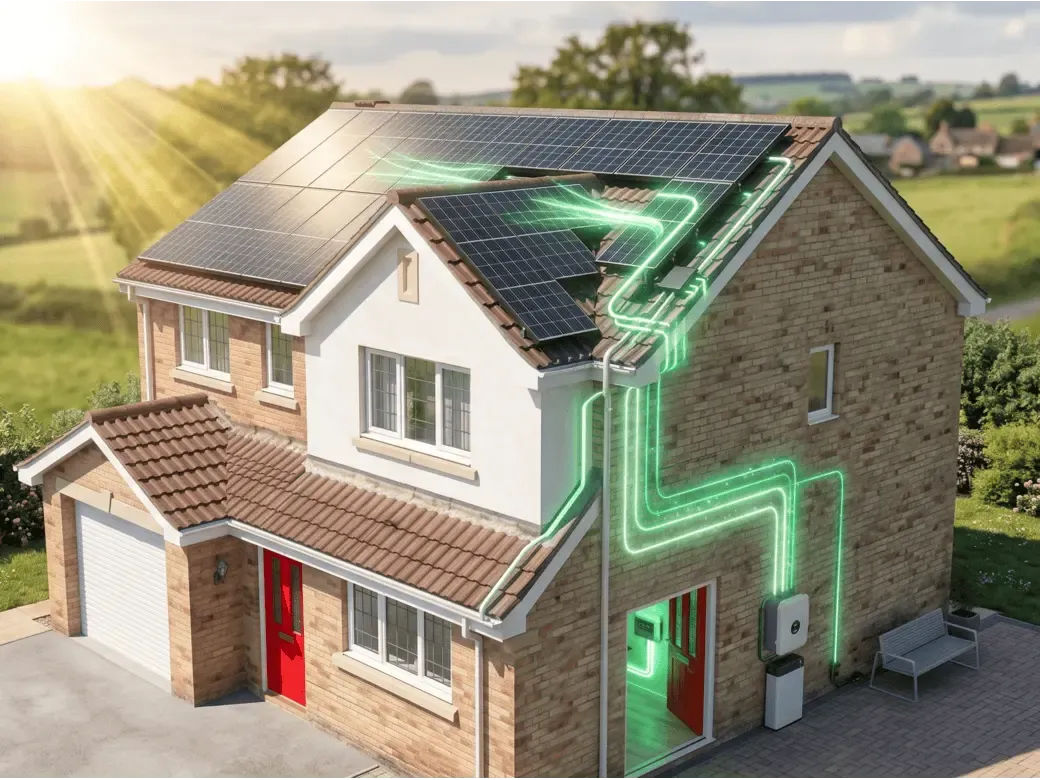
Solar panel efficiency is the percentage of sunlight a solar panel converts into usable electricity. Most panels on the UK market today are between 15% and 23% efficient, with the best monocrystalline panels reaching around 23–25%. The higher a panel's efficiency, the more electricity it generates from each square metre of roof, letting you hit your target output from fewer panels.
As MCS-certified installers with over 5,000 installations across the North East, we design every system around how your roof performs, starting with a free survey.
Quick Navigation:
How Efficient Is a Solar Panel?
A solar panel rated at 20% efficiency turns 20% of the daylight hitting it into electricity, with the rest lost as heat and reflection. Most panels installed on UK homes today are monocrystalline, converting between 20% and 23%.
These ratings are measured under Standard Test Conditions: a laboratory benchmark that assesses every panel at 25°C, under light of 1,000 watts per square metre. This allows different panels to be compared on equal terms, though these conditions are rarely matched on a British roof, so a panel's rated efficiency and its output once installed will differ.
Efficiency and power output are separate measures. Efficiency is the conversion percentage; wattage, such as 450W, is the total electricity a panel produces. Because efficiency is measured per square metre, a smaller high-efficiency panel can generate more than a larger, less efficient one across the same area. This is why system size in kilowatts is a more reliable basis for comparing quotes than the number of panels.
How much of a panel's rated efficiency reaches your home depends on the roof it sits on and the system it is part of.
Solar Panel Efficiency by Panel Type
The type of cell a panel uses is the biggest factor in how efficient it is. Three types account for almost all solar panels, and they perform quite differently.
Panel Type | Typical Efficiency | Appearance | Best Suited To |
Monocrystalline | 20–23% | Sleek, all-black | UK homes – the standard choice today |
Polycrystalline | 15–17% | Blue, speckled | Older and budget systems; now rarely fitted |
Thin-film | 10–13% | Thin, flexible | Caravans, boats and large commercial roofs |
Monocrystalline panels are cut from a single silicon crystal, which lets them convert sunlight more efficiently and gives them their uniform black finish. They are what we install at Elite Energy – our 465W all-black panels are monocrystalline, tested to 23% efficiency, placing them at the top of the domestic range.
Polycrystalline panels are made from multiple silicon crystals melted together. They are cheaper to produce but less efficient, and as monocrystalline prices have fallen, they have largely disappeared from new home installations. Thin-film panels are lightweight and flexible, but their low efficiency makes them impractical for the average roof, where space is finite.
It is worth knowing that a solar cell and a finished panel are not the same thing. In the laboratory, individual cells have exceeded 40% efficiency, but a completed panel includes a frame, glass and backing sheet that carry no current, so its overall efficiency is always lower than the cell figures behind the headlines. The most promising development is the perovskite-silicon tandem cell, which has passed 30% in testing, though these are not yet sold as panels for UK homes.
To understand how these cells generate electricity in the first place, see our guide to how solar panels work.
What Affects Solar Panel Efficiency?
A panel's rated efficiency is fixed, but several factors decide how much of it reaches your home. Some are set by your roof, others by the panels themselves as they age.

Temperature
Solar panels lose roughly 0.3% of their output for every degree above 25°C. Britain's cool, mild climate is an advantage here, keeping panels closer to their ideal operating temperature than hotter countries manage. Panels continue generating in high temperatures, with output falling as they heat and returning as they cool.

Shading
A single shaded panel can reduce the output of every panel wired to it on the same string. Chimneys, aerials, overhanging branches and neighbouring buildings are the usual causes, which is why shading needs to be assessed before a system is designed.

Orientation and Pitch
A south-facing roof at around 30–35° generates the most electricity. East or west-facing roofs still perform well but produce roughly 10–15% less over the year, while north-facing roofs are not suited to solar. A split east-west roof spreads generation more evenly across the day rather than peaking at midday.

Panel Age
Panels degrade slowly, losing around 0.3–0.5% of their output a year. Most retain 80–90% of their original performance after 25 years, and manufacturers typically guarantee around 90% at year 10 and 80% at year 25.

Dirt and Debris
Dust, pollen, leaves and bird droppings block light from the cells and reduce output. On a pitched roof, UK rainfall clears most of it, so panels rarely need much attention.
How to Maximise Solar Panel Efficiency
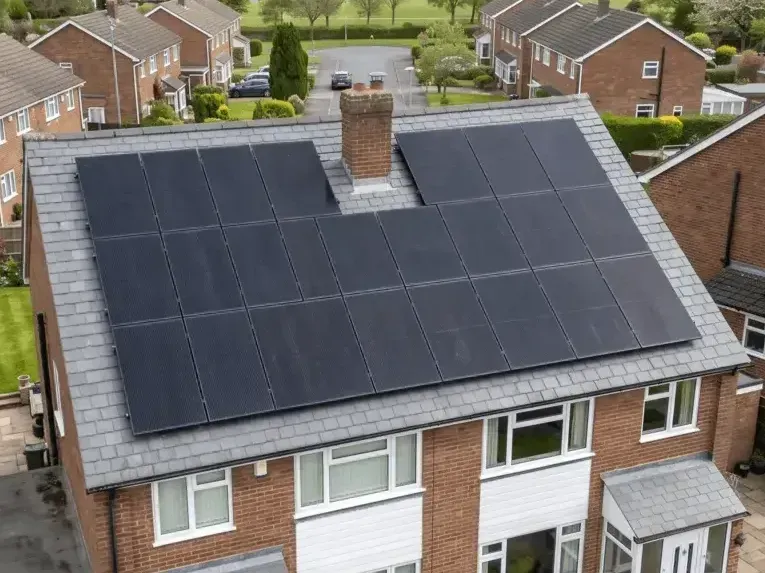
A panel's rating is fixed at manufacture, but the way a system is designed and maintained determines how much of that rating you see. These are the factors that make the difference.
Set the Optimal Angle and Tilt
In the UK, a tilt of around 30–35° captures the most sunlight across the year, which is why most pitched roofs are well suited to solar. On a flat roof, panels are mounted on angled frames to achieve the same pitch rather than laid flat, where output would be lower and dirt would gather.
Choose the Right Orientation
Orientation is set at the design stage and is one of the most significant decisions for output. South-facing arrays generate the most; east or west-facing roofs produce less but can suit households that use more electricity in the morning or evening. Where a roof faces multiple directions, panels are placed to capture the strongest generation.
Reduce and Manage Shading
Where shading cannot be designed out, panel-level optimisers or microinverters limit its effect by allowing each panel to perform independently, rather than one shaded panel holding back the rest of the string. Keeping arrays clear of overhanging branches also helps maintain output over time.
Keep Your Panels Clean
On most pitched roofs, rainfall keeps panels clear enough that cleaning is only occasionally needed, such as after heavy pollen or in areas with frequent bird activity. Cleaning is best left to a professional; walking on a roof to reach panels carries a safety risk and can damage the array.
Choose the Right Inverter and Consider Storage
The inverter converts the electricity your panels produce into a form your home can use, and a well-matched inverter keeps conversion losses low. Adding a battery does not raise a panel's efficiency, but it increases how much of your generation you use yourself, typically from around 50% to 75% or more. Our solar battery storage guide explains how this works in detail.
Making the Most of Solar Panel Efficiency
A well-sized system meets 50–70% of a typical home's annual electricity use. Higher-efficiency panels generate more per square metre, but whether that is worth paying for depends on your roof. With enough space, you can fit additional panels to reach the same output.
On a smaller or partly shaded roof, higher efficiency is often what makes your target achievable. Orientation, pitch and shading shape the result as much as the panel rating itself.
Our guide to the pros and cons of solar panels covers whether solar suits your home. For figures specific to your property, a free survey confirms your roof's orientation, pitch and shading and gives you a fixed-price quote.
Frequently Asked Questions
How efficient are solar panels in the UK?
Most solar panels installed on UK homes are 15–23% efficient, with premium monocrystalline panels reaching 23–25%. The UK's cooler climate helps, as panels lose efficiency in high heat and stay closer to their ideal operating temperature here than in hotter countries.
Do solar panels work efficiently on cloudy days?
Yes. Solar panels generate from daylight, not direct sunshine, so they continue producing under cloud, typically at 10–25% of their peak output. UK generation figures already account for the usual mix of weather across the year.
How efficient are solar panels in winter?
Panels are as efficient in winter as at any other time, but shorter days and lower sun mean total generation is lower. Cold itself does not reduce efficiency; panels perform well on bright, cold days.
What is the most efficient type of solar panel?
Among panels available for UK homes, top-tier monocrystalline models are the most efficient, reaching around 23–25%. Perovskite-silicon tandem cells have passed 30% in testing but are not yet sold as panels for domestic use.
How efficient are solar panels after 25 years?
Most panels retain 80–90% of their original output after 25 years, degrading at around 0.3–0.5% a year. Manufacturers typically guarantee about 80% of rated output at the 25-year mark.
Does panel efficiency affect how many panels I need?
Yes. Higher-efficiency panels produce more per square metre, so you need fewer of them to reach a given output. This matters most on smaller roofs. Our guide on how many solar panels you need explains how to work out the right number.