Elite Energy News
Solar Panels vs Heat Pumps
If you're choosing between solar panels and heat pumps, solar panels are usually the better place to start. They cost less than a heat pump and begin cutting your bills sooner. A heat pump is a bigger investment, but it takes priority if your boiler is old, failing, or running on oil or LPG.
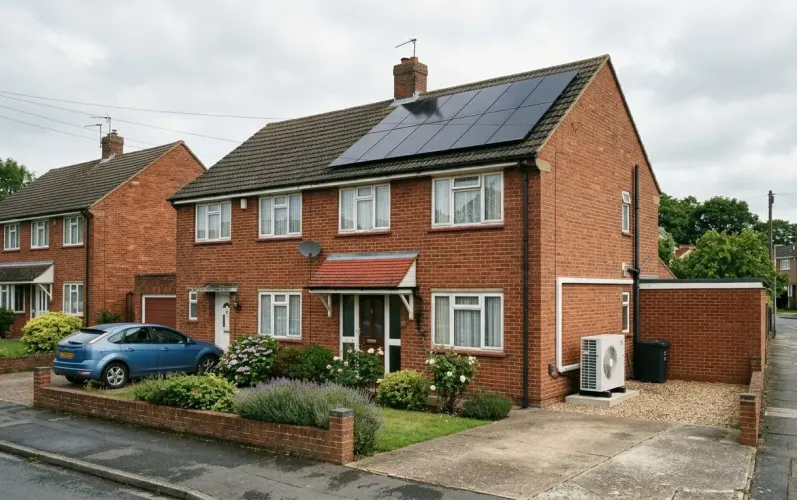
Which one is more valuable depends on your circumstances: your heating fuel, how much electricity you use, your roof and your budget all play a part. Solar panels lower your electricity bill; a heat pump lowers your heating costs and reduces your reliance on gas. The two also work well together, the electricity your panels generate can help run your heat pump.
If you're weighing it up for your own home, you can get a free quote – or read on for how solar panels and heat pumps compare.
Quick Navigation:
Solar Panels vs Heat Pumps: What's the Difference?
Solar panels convert daylight into electricity through photovoltaic cells, giving you power for your lights, appliances, hot water and anything else that runs on electricity. An air source heat pump takes warmth from the outside air and uses it to heat your radiators, underfloor heating and hot water cylinder, running on electricity instead of burning gas, oil or LPG.
Here's how they compare at a glance.
Solar Panels | Air Source Heat Pump | |
What it does | Generates electricity | Provides heating and hot water |
What it replaces | Part of your electricity bill | Your gas, oil or LPG boiler |
Effect on bills | Lowers your electricity bill | Removes your gas bill, raises electricity use |
Typical cost | From £3,995 | £8,000–£18,000 (average around £12,000) |
Available Incentives | 0% VAT | BUS grant up to £7,500–£9,000 |
Lifespan | 25+ years | 15–25 years |
Install time | 1–3 days | 3–5 days |
Should You Install Solar Panels or a Heat Pump First?
For most homes with a working boiler, solar panels are the one to install first. They cost less to fit, they start saving you money immediately, and once they're on your roof they lower the running cost of a heat pump you add later. If your budget only stretches to one upgrade for now, solar is usually the safer first move.
The exception is your heating system. If your boiler is old, unreliable, or running on oil or LPG, a heat pump makes more sense first. You'll be replacing your heating before long anyway, and the Boiler Upgrade Scheme covers a large part of the cost – up to £7,500 when you replace a gas boiler, or up to £9,000 for oil or LPG. That's often enough to put the heat pump ahead of solar.
The best order for renewable energy upgrades comes down to your own situation. The table below shows where most households should start.
Your Situation | Install First | Why |
Your boiler works and your electricity bills are high | Solar panels | Lower upfront cost, quick payback, and reduces the running cost of a future heat pump |
Your boiler is old or unreliable | Heat pump | You will need to replace your heating anyway, and the BUS grant reduces the cost |
You heat your home with oil or LPG | Heat pump | Offers the biggest running-cost saving, plus up to £9,000 through the BUS grant |
You have limited or north-facing roof space | Heat pump | Solar panels may generate too little electricity to make them the best first option |
You own an EV or are home during the day | Solar panels | You can use more of the electricity you generate, increasing your savings |
You want the biggest long-term saving | Solar panels and a battery, followed by a heat pump | Combined, they can reduce total energy bills by over 60% |
Whichever you start with, it's worth planning for the other from the outset, so the first installation doesn't need reworking when you add the second. If you're not sure which suits your home, you can get a free quote and talk it through.
Cost Comparison: Heat Pumps vs Solar Panels
Solar panels are cheaper to install than a heat pump, though both come with funding that can reduce the cost.
A solar installation ranges from around £3,995 for a six-panel system to £8,495 for a 20-panel system with battery storage. Solar benefits from 0% VAT, in place until March 2027, which keeps the price down. For a full breakdown of pricing, see our solar panel cost guide or our solar panel price calculator for a tailored quote.
An air source heat pump typically costs between £8,000 and £18,000, with most three to four bedroom homes around £12,000. The Boiler Upgrade Scheme (BUS) brings that down for almost everyone. It isn't means-tested, it's open to standard homeowners, and it's deducted before you pay. As the main heat pump grant in the UK, it’s worth up to £7,500 when you replace a gas boiler, or up to £9,000 when you replace oil or LPG.
Scenario | Installation Cost | BUS Grant | You Pay |
Replacing a gas boiler | £12,000 | £7,500 | £4,500 |
Replacing oil or LPG | £12,000 | £9,000 | £3,000 |
That brings the amount you pay for an average heat pump down to between £3,000 and £4,500.
It's also worth knowing where funding is heading. Government funding is moving to the Warm Homes Plan, a £15bn programme running to 2030, so support for both technologies is set to continue.
Savings Comparison: Which Saves More?
Solar panels and heat pumps save money in different places, so how much each one saves depends on your home. Solar lowers your electricity bill; a heat pump lowers your heating costs. The bigger saving usually comes from whichever covers your largest bill.
A typical solar panel system saves around £400 to £600 a year, with larger systems and those paired with a battery saving more. The savings come from two things: using the electricity you generate instead of buying it from the grid, known as self-consumption, and being paid for any surplus you export through the Smart Export Guarantee (SEG). Adding a battery raises your self-consumption from roughly half of what you generate to around three-quarters, which is where most of the extra saving comes from.
A heat pump's saving depends on the heating it replaces. Against a modern gas boiler the saving is modest, around £300 a year. Against an ageing boiler, or oil or LPG heating, it's much larger, commonly £700 a year or more. A heat pump produces three to four units of heat for every unit of electricity it uses, so even though electricity costs more per unit than gas, the running cost still works out lower.
Where a heat pump saves the most is on a time-of-use tariff. These charge a cheaper rate during off-peak hours, usually overnight, and a higher rate during a short peak window in the early evening. Because a heat pump doesn't need to run at full output all day, you can schedule most of your heating and hot water for the cheaper hours and largely avoid the expensive ones, which brings running costs down further.
On payback, solar usually comes out ahead. A system often pays for itself in five to nine years, then generates free electricity for the remaining 15-plus years of its life. A heat pump takes longer to pay back, but it replaces a boiler you would have had to buy anyway, lasts longer than one, and removes your gas bill entirely.
Is Your Home Suitable for Solar Panels or a Heat Pump?
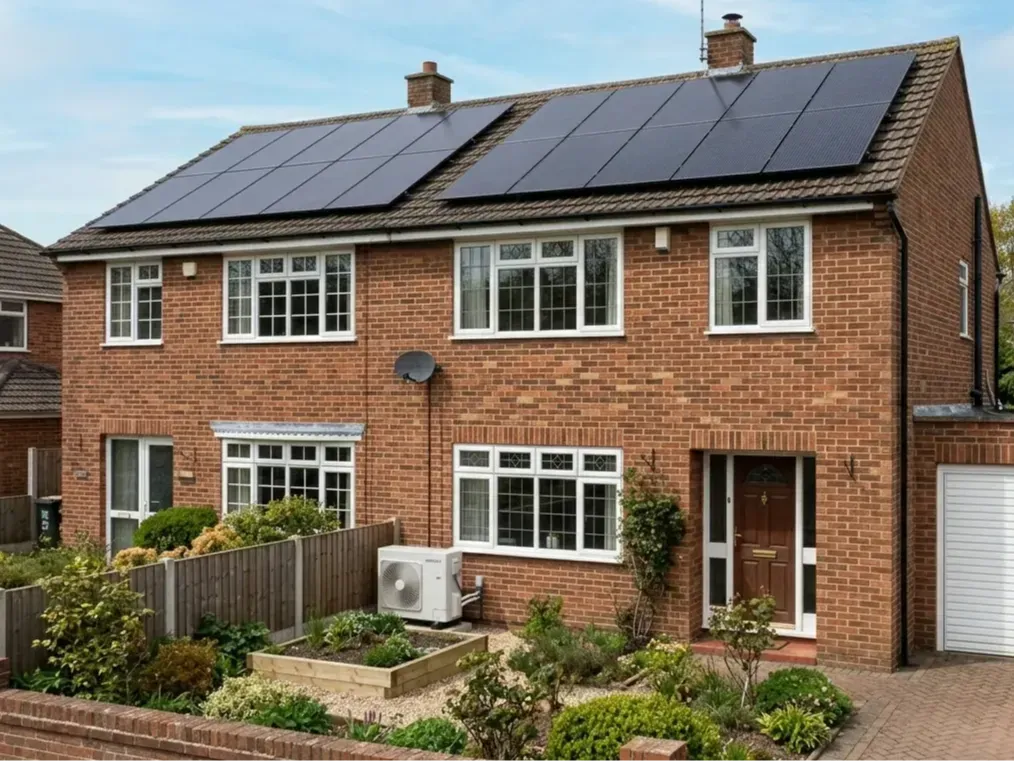
For solar panels, it comes down to your roof. South-facing roofs generate the most; east and west-facing roofs still work well but produce around 10–15% less over a year; north-facing roofs are rarely worth it. A pitch of around 30–35 degrees is ideal, and shading from trees, chimneys or nearby buildings reduces output.
The roof also needs to be in good condition, if it's due for replacement in the next few years, it's better to do that first and fit the panels onto the new surface. Beyond that, you need enough usable roof space for a system sized to your electricity use.
A heat pump has different requirements. You need space outside for the unit, with enough clearance for air to flow around it, and space indoors for a hot water cylinder. A reasonable level of insulation helps, because a well-insulated home holds onto heat and lets the heat pump run efficiently. Some homes need one or two radiators upsized to work at the lower flow temperatures a heat pump uses, and older properties occasionally need an electrical supply upgrade.
A north-facing or heavily shaded roof points towards a heat pump first, while plenty of unshaded roof space and a boiler with years left in it points towards solar.
Installation, Lifespan and Maintenance
The two systems also differ in how much work goes into fitting them and what they need afterwards.
Solar is the quicker, less disruptive job. Most installations take one to three days, with the panels mounted on the roof and wired into your consumer unit. A heat pump takes longer, usually three to five days, because it replaces your whole heating system rather than adding to it – the outdoor unit, pipework, a hot water cylinder and any radiator changes all have to be fitted and commissioned.
Solar panels last the longest of any home energy upgrade. They're typically warranted for 25 years and keep generating beyond that, usually at 80–85% of their original output by year 25. A heat pump lasts around 15 to 25 years with annual servicing, compared with 10 to 15 for a gas boiler. Over a 30-year period, that can mean fitting one heat pump in place of two or three boilers.
Both are low-maintenance. Solar panels have no moving parts and need little more than an occasional check; the main ongoing cost is replacing the inverter once, after about 10 years, at £500–£1,000. A heat pump needs a yearly service, but there's no flue, no combustion and no carbon monoxide risk to manage.
How Solar Panels and Heat Pumps Work Together
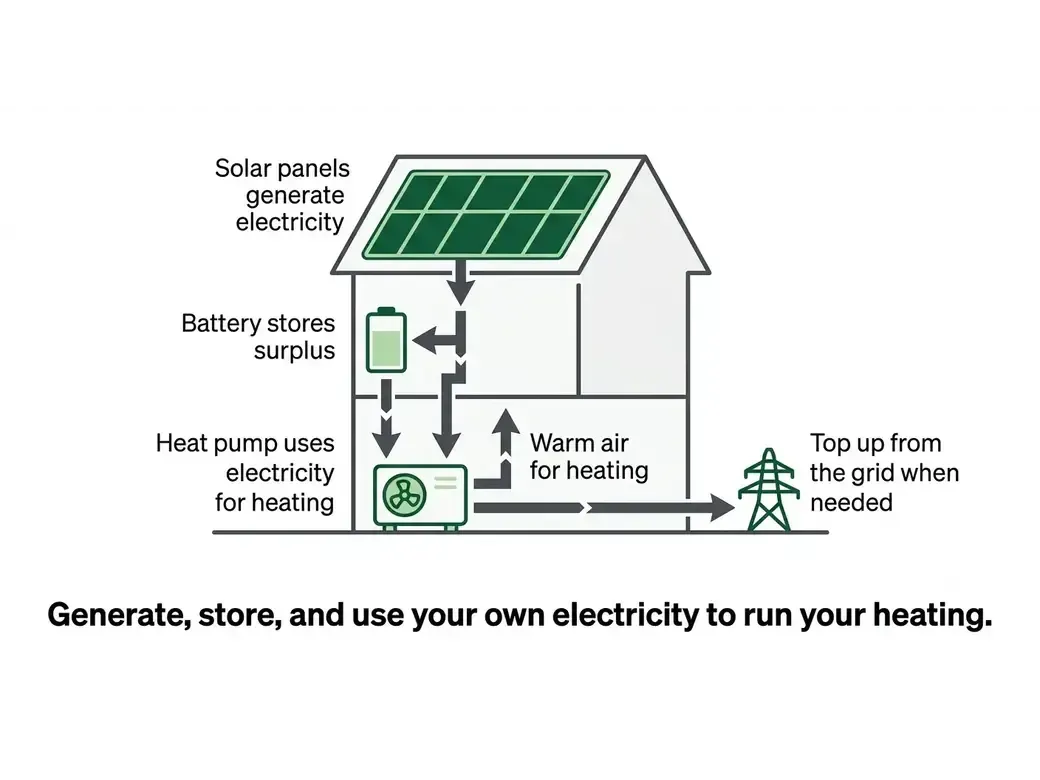
Heat pumps and solar panels are a natural pairing. A heat pump runs on electricity, and solar panels generate it, so when your panels are producing, that power can go straight to running your heat pump, heating your home with electricity you've generated yourself rather than buying it from the grid.
However, there's a limit to how far that goes. Heating demand is highest in winter, which is exactly when your panels generate least, so solar won't run your heat pump on its own all year round. Across a full year, panels realistically cover around a third of a heat pump's electricity.
A battery and a time-of-use tariff close much of the gap: you store solar electricity during the day, or cheap off-peak electricity overnight, and use it to run the heat pump when you need it.
Put together, the two deliver more than either system can on its own:
Lower bills overall. Solar offsets the electricity your heat pump uses, and homeowners who combine solar, a battery and a heat pump typically cut their total energy bills by more than 60%.
More of your solar power is put to use. A heat pump is a large, year-round electrical load, so more of the electricity you generate is used at home rather than exported at a lower rate.
Less exposure to rising prices. The more of your own electricity you generate and store, the less you buy, so price increases affect you less.
A foundation for an all-electric home. Add an EV charger and you can run your heating, your home and your car largely on electricity you generate yourself.
Solar Panels vs Heat Pumps: Which Is Right for Your Home?
There's no single answer that suits every home. The right choice depends on your circumstances, and the quickest way to narrow it down is to work through three things in order.
Start with your heating. If your boiler is old, unreliable, or running on oil or LPG, a heat pump is likely the priority – you'll be replacing your heating before long anyway, and the BUS grant takes a large part off the cost. If your boiler still has years left in it, there's no rush to replace it, which leaves you free to look at solar panels first.
Then look at your roof. A south, east or west-facing roof with limited shading makes solar worthwhile. A north-facing or heavily shaded roof, or very little usable space, makes solar harder to justify and moves a heat pump up the list.
Finally, your budget. If you can only fund one upgrade for now, the two steps above should point you to it. If you can fund both, installing them together – or solar first and a heat pump later – gives you the lowest bills and the most efficient setup, with the first installation designed around the second.
Because we install both solar panels and heat pumps with our own in-house team, we can tell you honestly which suits your home. We've completed over 5,000 home energy upgrades, with more than 15 years in the industry and full accreditation from MCS, TrustMark, RECC and Gas Safe. Every quote is fixed-price with no hidden extras, and it starts with a free, no-obligation survey of your home.