Elite Energy News
Air Source Heat Pump vs Gas Boiler
ASHP vs Gas Boiler: How Each System Heats Your Home
The biggest difference between a gas boiler and a heat pump is where the heat comes from.
How a Gas Boiler Works
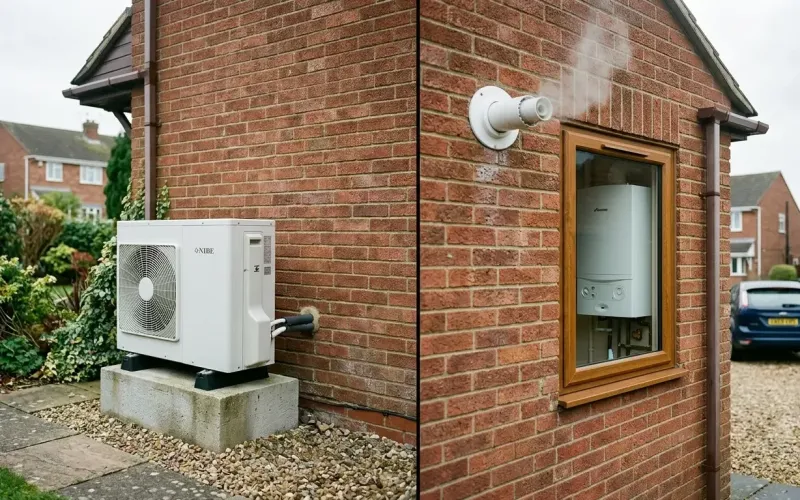
A gas boiler burns natural gas to heat water, which is then pumped to your radiators and taps. A combi boiler heats water on demand, while a system boiler stores hot water in a cylinder for use around the home.
Boilers produce high flow temperatures of 60–80°C, so radiators heat up quickly and deliver warmth in fast bursts.
How an Air Source Heat Pump Works
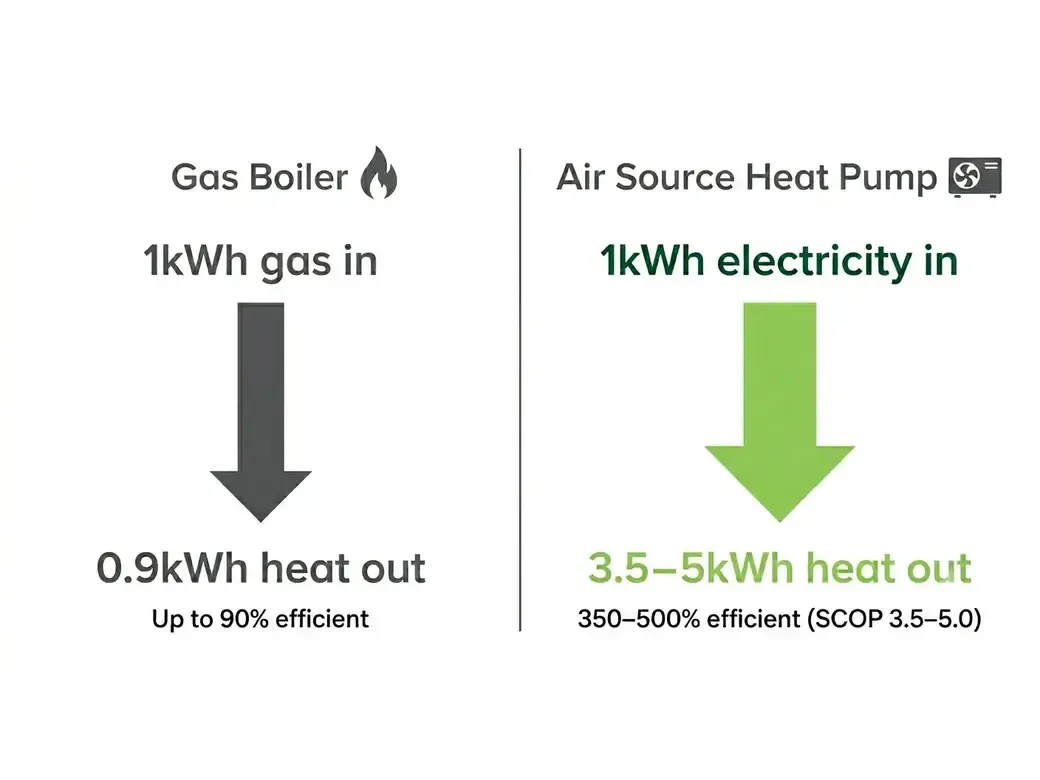
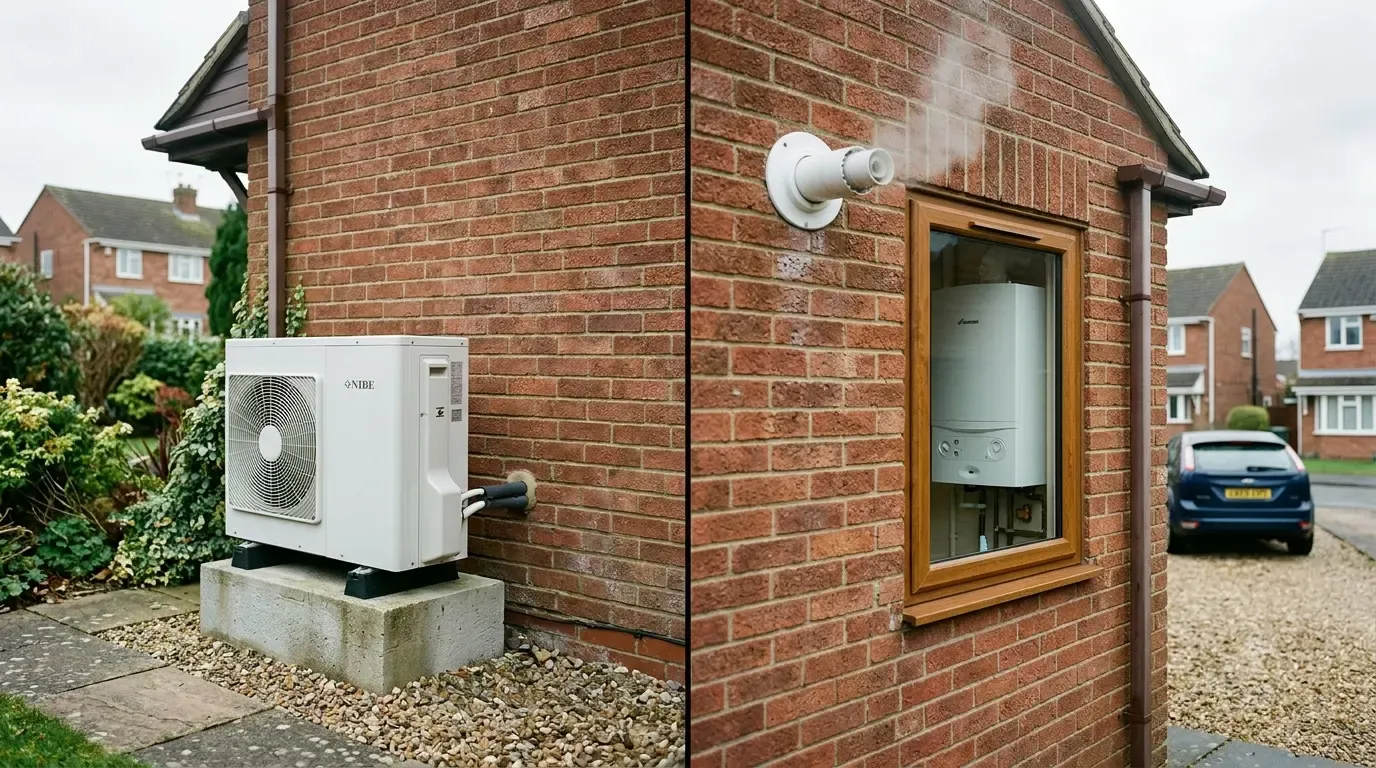
An air source heat pump extracts heat from the outside air, even in sub-zero temperatures, and uses a refrigerant cycle to raise it to a useful temperature. It runs on electricity rather than gas, with no combustion involved.
Heat pumps operate at lower flow temperatures of 35–45°C and deliver steady, consistent warmth rather than rapid bursts. Hot water is stored in a cylinder, so a hot water tank is part of the setup. Our guide on how air source heat pumps work explains the process in full.
Will My Home Feel Different?
A well-designed heat pump system keeps your home at a steady, comfortable temperature throughout the day rather than heating up fast and then cooling down. Many homeowners find the consistent background warmth more comfortable once they adjust to running the system at a lower temperature for longer periods.
Installation Timeline
A gas boiler swap is quicker and simpler. A heat pump installation takes more planning, but it's straightforward with a qualified installer.
-
1
Gas Boiler Installation
A like-for-like boiler replacement typically takes one day, with minimal disruption and no external works. Switching the boiler type or moving it to a new location adds complexity, often extending the job to two or three days and increasing the cost.
-
2
Heat Pump Installation
A heat pump installation takes 2–5 days depending on your property and any additional works. It requires a location for the outdoor unit with adequate airflow, a hot water cylinder, and possibly radiator upgrades to suit the lower flow temperature.
A home survey will assess all of this before installation, and a good installer will handle radiator upgrades as part of the job where needed. An MCS-certified installer will also manage the BUS grant application and the DNO notification on your behalf.
-
3
What Your Home Needs
To install an ASHP your property needs space for an outdoor unit, roughly the size of a small chest freezer, and space for a hot water cylinder in an airing cupboard, utility room, or garage. These units are getting smaller with each generation, and most aren't as large as people expect. Reasonable insulation helps the system perform efficiently, and your installer can assess whether any improvements are worth making beforehand.
Which Is Right for Your Home? Heat Pump or Gas?
The right choice comes down to your property, your budget, and how long you plan to stay.
For most homeowners facing a gas boiler replacement, a heat pump is the stronger long-term investment. But if your current boiler is young and working well, there's no urgency to switch before you need to.
A Heat Pump Makes Sense If
Your boiler is over 10 years old. If you're facing a replacement anyway, the real cost comparison isn't £12,000 vs £0, it's £12,000 (minus a £7,500 grant) vs the £2,000–£4,000 you'd spend on a new boiler that lasts half as long.
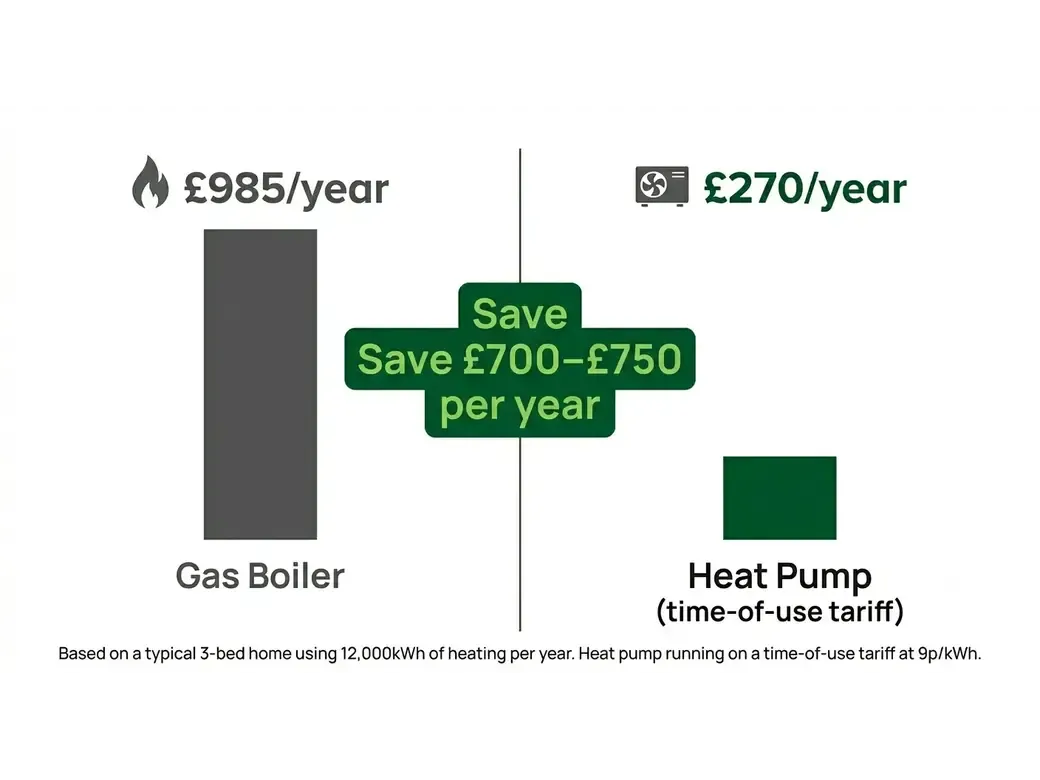
You can switch to a heat pump tariff: Heat pump tariffs usually offer multiple low-cost periods through the day, which suits the way a heat pump runs. If you're able and willing to switch, a heat pump becomes genuinely cheaper to run than your gas boiler.
You have the space. Room for an outdoor unit and potentially a hot water cylinder is essential. Most homes with a driveway, garden, or utility space can accommodate both.
You're staying put for 8+ years. This gives the lower running costs time to offset the higher upfront cost.
You want to lower your carbon footprint. A heat pump produces roughly a third of the carbon emissions of a gas boiler for the same heating.
A Gas Boiler Might Still Suit You If
Your current boiler is only a few years old. If it's working well and running efficiently, there's little financial sense in replacing it before the end of its life.
You need the cheapest possible replacement right now. If your boiler has failed and budget is the priority, a like-for-like swap is the lower upfront cost, even if it works out more expensive over time.
You genuinely have no space. Flats and terraced homes without outdoor access or room for a cylinder may not be suitable for a heat pump right now. However, smaller indoor units designed for flats and terraced homes are in development.
Your home is poorly insulated and can't be improved yet. A heat pump in a draughty, uninsulated home will struggle and cost more to run. In that situation, improving insulation first is the sensible call. Get in touch and we'll let you know whether we can help with this.