Elite Energy News
The Warm Homes Plan
The Warm Homes Plan sets out how the government intends to deliver home energy upgrades at scale over the rest of the decade, replacing fragmented schemes with a single, long-term structure.
The programme is built around three clear outcomes:
Lower household energy bills, with upgrades designed to reduce costs permanently rather than provide short-term relief. Government figures indicate savings of up to £600 per year, depending on the condition of the home and the measures installed.
Targeted support where energy costs hit hardest, including fully funded upgrades for low-income and fuel-poor households, alongside wider access for homeowners who want to improve their homes but cannot cover upfront costs.
Greater use of lower-cost, low-carbon technologies, including insulation, solar panels, home batteries, and low-carbon heating systems, helping households reduce reliance on gas and exposure to future price spikes.
Taken together, the Warm Homes Plan is intended to support upgrades in up to five million homes by 2030 and help lift as many as one million households out of fuel poverty. Rather than addressing energy efficiency in isolation, it is designed to improve how homes perform overall, focusing on measures that reduce bills, improve living conditions, and protect households from rising energy costs over the long term.
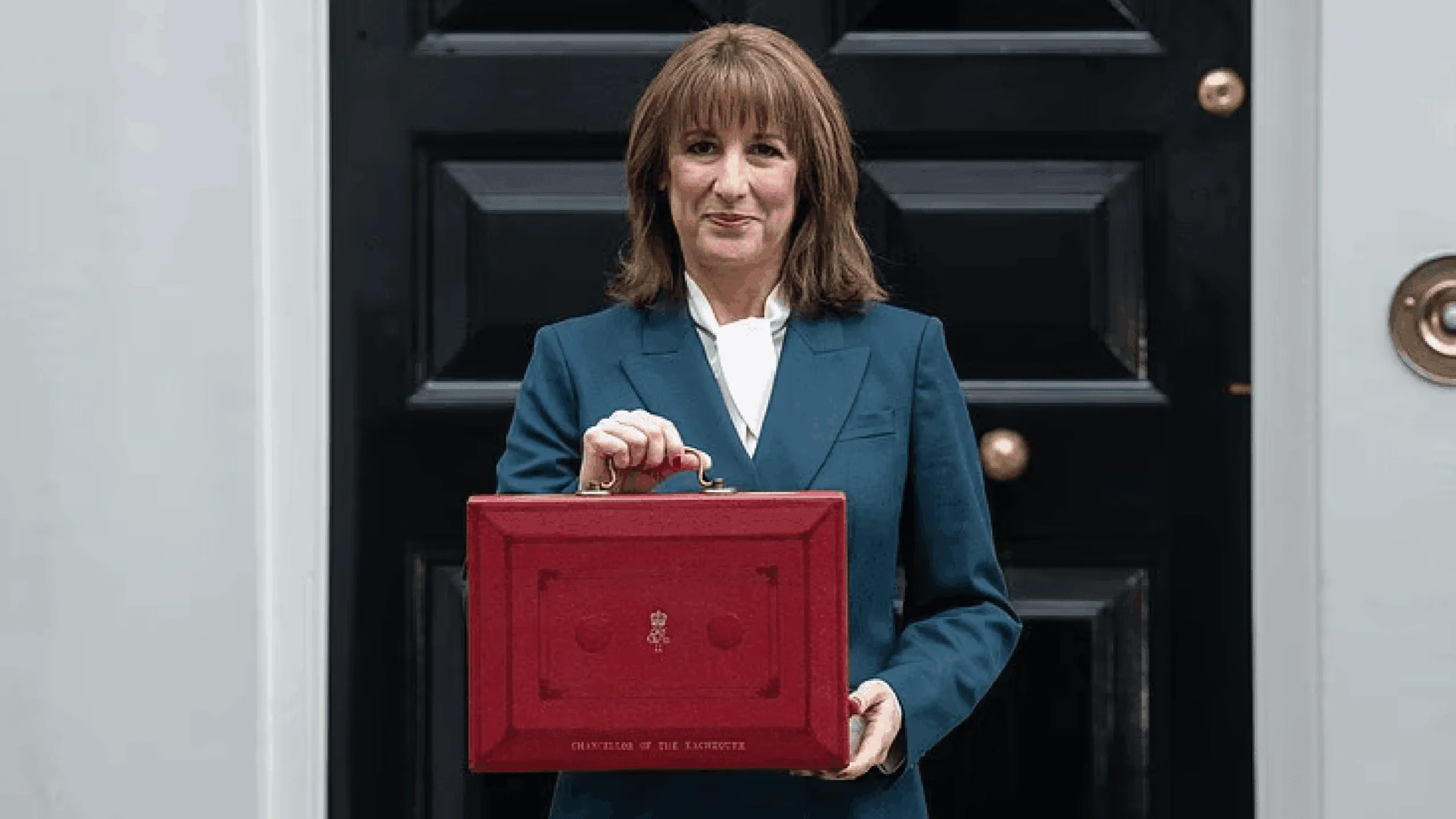
A £15 Billion Programme to Cut Energy Bills
The Warm Homes Plan is the UK government’s new long-term programme aimed at reducing household energy bills by improving the efficiency of homes across the country. It marks a shift away from short-term schemes and toward a single, structured framework set to run through to 2030.
Rather than removing support, the plan replaces existing ECO-style schemes as they come to an end. When ECO4, LA Flex and GBIS finish in 2026, the Warm Homes Plan is intended to take over as the main route for government-backed home upgrades, bringing insulation, heating, and clean energy technologies under one programme.
Not every detail has been confirmed yet, but the overall structure is now clear. Funding levels, target households, and the types of upgrades included have been announced, while eligibility rules and application routes are still being finalised. Our guide explains what’s confirmed, what’s expected, and what you should know as the scheme develops.
What Home Upgrades Are Included?
The Warm Homes Plan supports upgrades that make homes cheaper to run and more comfortable to live in. While cutting carbon emissions is a direct outcome of these changes, the programme is framed around improving living conditions and reducing long-term energy costs.
Upgrades confirmed as part of the plan include:
Insulation measures: Loft, wall, floor and roof insulation, alongside draught-proofing, aimed at reducing heat loss and keeping homes warmer for longer.
Low-carbon heating systems: Support for alternatives to gas heating, including air source, ground source and air-to-air heat pumps, where suitable for the property.
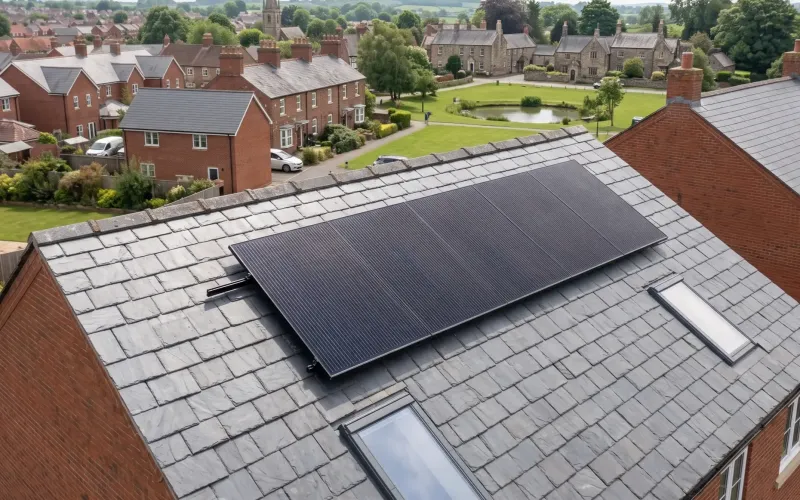
Solar panels: Solar PV systems that allow households to generate their own electricity and rely less on energy bought from the grid. The government has stated an ambition to triple the number of homes with rooftop solar by 2030.
Home battery storage: Battery systems that store excess solar generation for use later in the day, increasing the amount of energy a household can use itself.
Smart controls and supporting technologies: Controls that help households manage heating and electricity more effectively, improving comfort while reducing unnecessary energy use.
Which measures are included will depend on the home’s condition, existing heating system, and the funding route used. Upgrades are expected to be selected based on where they deliver the biggest improvement to day-to-day living conditions and long-term energy costs for that property.
How the Warm Homes Plan Is Funded
The Warm Homes Plan is backed by a £15 billion government commitment between 2025 and 2030, designed to make home upgrades accessible to far more households than previous schemes.
Fully Funded Upgrades
For households most affected by high energy costs, the plan includes fully funded packages that remove the need for any upfront contribution. These are expected to focus on homes with poor energy efficiency and households in fuel poverty, where upgrades can make the biggest difference to bills and living conditions.
In these cases, support may cover the full cost of measures such as insulation, low-carbon heating, or solar and battery systems, depending on what the property needs.
Grants for Specific Technologies
Alongside fully funded support, the plan includes grant-based funding for particular technologies, such as air source heat pumps. This allows households who are able to contribute something themselves to reduce the overall cost of upgrades such as heat pumps, insulation improvements, or renewable energy systems.
Grants are intended to lower the barrier to entry, rather than fund every measure in full, making upgrades achievable for a wider group of homeowners.
Loans and Low-Cost Finance
The Warm Homes Plan introduces government-backed low and zero-interest loans for households that are not eligible for fully funded support but would find upfront costs difficult to manage. By spreading the cost over time, loans allow households to install measures like solar panels, batteries, or low-carbon heating now, while benefiting from lower energy bills as they repay the cost.
Together, these funding routes are intended to replace the more restrictive, scheme-by-scheme approach seen under ECO. Instead of fitting households into one narrow pathway, the Warm Homes Plan uses different types of financial support to widen access, allowing more people to upgrade their homes in a way that reflects both their financial situation and the condition of their property.
Who the Warm Homes Plan Is Designed to Help
The Warm Homes Plan is aimed at households where high energy costs are driven by inefficient homes, outdated heating, or limited ability to pay for upgrades upfront. Support is expected to differ depending on household circumstances and housing type.
Low-Income and Fuel-Poor households
Homes where energy bills are disproportionately high relative to income are a central focus. These households are expected to receive priority access to upgrades where poor insulation, inefficient heating, or reliance on expensive fuels is pushing costs up. For many, support is intended to remove upfront cost entirely, particularly where homes have low EPC ratings or long-standing efficiency issues.
Homeowners Facing Affordability Barriers
The plan also targets homeowners who are not classed as fuel poor but cannot realistically fund major upgrades themselves. This includes households with older properties, inefficient heating systems, or rising energy costs that make improvements financially difficult without support. For this group, the plan is expected to provide routes to upgrade without requiring large one-off payments.
Renters and Landlords
Rented homes are included due to their higher likelihood of poor insulation and inefficient heating. The Warm Homes Plan is expected to support improvements across both private and social rented properties, with a stated ambition to help lift around half a million households in rented accommodation out of fuel poverty by 2030.
Support is intended to focus on reducing high heating costs in homes that are currently expensive to run, improving day-to-day living conditions for tenants while setting clearer expectations around energy efficiency over time.
How Eligibility Is Likely to Work (Based on What We Know)
Eligibility rules for the Warm Homes Plan have not yet been published. However, based on the structure of the programme, funding announcements, and how previous government-backed schemes have operated, there are some clear indications of how eligibility is expected to be assessed.
What is confirmed is that support will be routed differently depending on household circumstances and property type. The plan is designed to prioritise homes with higher energy costs and poorer efficiency, while also offering routes for households that are not eligible for full funding.
Based on current information, eligibility is expected to consider:
Household income and vulnerability, particularly for fully funded support aimed at households in or at risk of fuel poverty.
Energy performance of the property, with inefficient homes more likely to qualify for higher levels of support.
Property suitability, including whether insulation, heating or clean energy technologies are appropriate for the building.
Local delivery routes, with some decisions likely to involve local authorities or regional programmes.
Households that do not meet criteria for full funding are expected to access support through grant-based routes or government-backed loans, rather than being excluded entirely.
How the Warm Homes Plan Will Be Delivered
The Warm Homes Plan is not a single funding scheme. Instead, it brings together multiple government-backed programmes under one national plan, with each scheme designed to support different types of households and housing stock.
Rather than replacing all existing routes with one application process, the plan groups several schemes under a shared structure, including:
The Warm Homes Local Grant, expected to support upgrades delivered through local authorities, particularly for low-income and fuel-poor households.
The Warm Homes Social Housing Fund, focused on improving energy efficiency across social housing at scale.
The Boiler Upgrade Scheme, which remains the main route for heat pump grants and is expected to continue operating as part of the Warm Homes Plan.
To coordinate delivery across these routes, the government has confirmed the creation of a Warm Homes Agency, responsible for standards, consumer protection, and how schemes work together. For households, this is intended to provide clearer guidance and a more consistent experience, even though support may come through different programmes.
Upgrades will still be delivered by approved providers rather than directly by the government. This mirrors how schemes such as ECO4, GBIS, and the Boiler Upgrade Scheme already work.
At Elite Energy, this is exactly how we operate. We manage the full journey for households, from eligibility checks and funding routes through to surveys, installation, and aftercare. As the Warm Homes Plan replaces existing schemes, we will continue delivering funded and supported upgrades under the new framework, helping households access the right support without having to navigate the complexities themselves.
How the Warm Homes Plan Replaces ECO (and What That Means for Households)
For households familiar with ECO-style schemes, the most relevant change is how and when support will be accessed, rather than what types of upgrades are supported.
ECO4, LA Flex and GBIS are all time-limited programmes with defined end dates. As these schemes close in 2026, the Warm Homes Plan is intended to become the default route through which government-backed home upgrades are funded and delivered.
This change affects households in two main ways:
Access to support is expected to be more consistent: Under ECO-style schemes, eligibility could depend on local authority routes, supplier funding, or limited funding windows. The Warm Homes Plan is expected to assess support more around household circumstances, property condition, and suitability for improvement, rather than short-term scheme rules.
Support is expected to be available over a longer period: Previous schemes worked in fixed phases, which meant households could miss out based on timing or location. The Warm Homes Plan is designed to reduce stop-start funding by providing a clearer route to upgrades over several years.
For households currently eligible under ECO-style support, this does not automatically mean waiting is the right option. Some upgrades may still be accessed sooner under existing schemes, depending on individual circumstances. For others, the Warm Homes Plan is expected to offer wider options once eligibility routes are fully confirmed.
What Households Should Do Now
With eligibility rules and application routes still being finalised, there’s no need to rush into decisions. However, there are sensible steps households can take now to be better prepared when the Warm Homes Plan fully opens.
Check how your home currently performs: Knowing your EPC rating, heating system, insulation levels, and roof suitability for solar helps clarify what types of upgrades may be appropriate once eligibility is confirmed.
Be cautious of assumptions: Until full guidance is published, no provider can guarantee eligibility or funding levels under the Warm Homes Plan. Any claims suggesting otherwise should be treated carefully.
Consider existing schemes where relevant: Some households may still be able to access support through ECO4 or LA Flex, before they close. In certain cases, acting under current schemes may be more suitable than waiting.
Stay informed rather than waiting passively: While not all details are final, the overall direction of the Warm Homes Plan is clear. Understanding your home’s starting point now makes it easier to act when routes open.
At Elite Energy, we continue supporting households through existing government-backed schemes while preparing for delivery under the Warm Homes Plan. As more detail is confirmed, we’ll provide clear, up-to-date guidance on eligibility and funding routes, helping households understand their options without pressure.
Frequently Asked Warm Homes Plan Questions
When will the Warm Homes Plan officially start?
The Warm Homes Plan is scheduled to run through to 2030, with existing schemes continuing until 2026. While funding and scope have been confirmed, detailed eligibility rules and application routes are still being finalised. Further clarity is expected as existing programmes begin to close.
How will households actually apply for support under the Warm Homes Plan?
Application routes have not yet been confirmed. What is expected is that households will apply through approved delivery partners, rather than directly through the government. This mirrors how existing schemes operate, where eligibility checks, surveys and funding routes are managed as part of a single process.
Will the Warm Homes Plan apply to homes that are off the gas grid?
Homes not connected to the gas grid are expected to be a priority area, particularly where heating costs are high due to oil, LPG or electric systems. How this is reflected in eligibility criteria will depend on final guidance, but off-gas properties are a known focus in previous government-backed schemes.
Will new-build homes be eligible for upgrades under the plan?
The Warm Homes Plan is primarily focused on improving the existing housing stock. New-build homes are expected to be addressed through separate standards, such as requirements for solar panels on new properties, rather than through retrofit-style funding.
Can second homes or buy-to-let properties access support?
Support is expected to focus on primary residences where energy costs affect day-to-day living. Second homes are unlikely to be prioritised. Buy-to-let properties may be included where upgrades are linked to improving tenant living conditions, but final eligibility rules will determine how this is handled.
What happens if a home needs multiple upgrades, not just one measure?
The plan is designed to support packages of improvements where appropriate, rather than limiting homes to single upgrades. Final decisions will depend on property condition, funding route and what delivers the biggest improvement to energy performance.