How Much Does a New Boiler Cost in the UK?

Elite Energy News

How Much Does a New Boiler Cost in the UK?
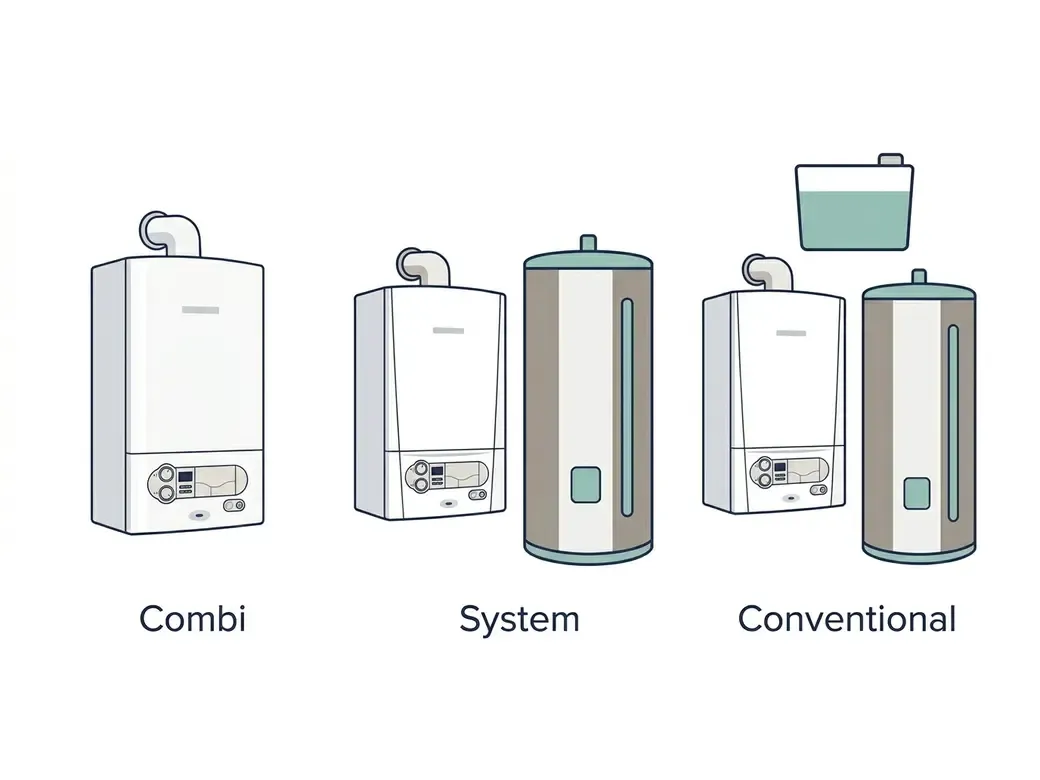
A new boiler in the UK in 2026 typically costs between £2,000 and £4,500 fully installed. A like-for-like combi boiler replacement sits at the lower end of that range, while system and conventional boiler replacement costs run higher due to the additional components and pipework involved.

Every home is different, and the right boiler – and the right price – depends on your existing setup, hot water demand, and whether you qualify for any grant support. If you'd like a bespoke price, Elite Energy offers both private and government-funded boiler installation, with every quote based on a free home survey.

How Much Does a New Boiler Cost?

A new boiler costs between £2,000 and £4,500 installed in the UK in 2026, with most homeowners paying around £2,500 for a like-for-like combi boiler replacement. The exact cost depends on the type of boiler, the size of your home, the fuel you're using, and how much work the installation involves beyond a straight swap.

Here's how typical new boiler installation costs break down by type:

Boiler type

Typical installed cost

Combi boiler (like-for-like swap)

£2,000–£3,000

Combi boiler (conversion from another type)

£3,000–£4,500

System boiler replacement

£2,500–£3,500

Conventional / heat-only boiler replacement

£3,000–£4,500

Electric boiler installation

£2,500–£4,000

These figures cover the full standard installation: the boiler unit, flue, controls, system flush, electrical and gas connections, and any minor adjustments to your existing setup.

It’s important to note that every boiler installation is bespoke, with the final cost determined by your home's heat demand, hot water requirements, household size, existing pipework and whether any system upgrades are needed. The only reliable way to know your actual boiler replacement cost is to get a quote based on your property.

How Much Does a New Combi Boiler Cost?

A new combi boiler costs between £2,000 and £3,000 fully installed for a like-for-like replacement, rising to £3,000–£4,500 if you're converting from a system or conventional setup.

Combi boilers are the most popular choice in the UK, accounting for around 70% of new installations. They provide heating and hot water on demand from a single unit, with no need for a separate hot water cylinder or cold water tank.

Replacing an old combi with a new one in the same location is the simplest and cheapest job. Converting from a system or conventional boiler involves removing the cylinder and tank, capping pipework and adapting the heating circuit, which adds materials, labour and time.

A combi boiler is usually the right choice if:

  • You live in a 1–3 bedroom home with one bathroom

  • Your hot water demand is moderate (no more than one shower or tap running at a time)

  • You have good mains water pressure

  • You want to save space by removing tanks and cylinders

How Much Does a New System Boiler Cost?

A new system boiler costs between £2,500 and £3,500 fully installed. System boilers work with a hot water cylinder and are designed for homes with higher hot water demand than a combi can comfortably handle.

The pricing factor specific to system boilers is the cylinder. If your existing cylinder is in good condition and the right size, it can be retained. If it needs replacing or upsizing, that adds £500-£1,000 to the replacement cost. Pipework changes and a system flush are usually included in the installation price.

A system boiler is usually the right choice if:

  • You live in a 3–5 bedroom home with two or more bathrooms

  • More than one tap or shower may be running at the same time

  • You have existing cylinder space (typically an airing cupboard)

  • You want strong, consistent hot water pressure across the property

How Much Does a New Conventional Boiler Cost?

A new conventional boiler, also called a regular or heat-only boiler, costs between £3,000 and £4,500 fully installed, including any necessary work to the hot water cylinder and cold water tank.

Conventional boilers are the most traditional setup, using both a hot water cylinder (usually in an airing cupboard) and a cold water tank (usually in the loft). They're best suited to older properties with existing tank infrastructure, larger homes with high hot water demand, or properties on low mains pressure where a combi or system boiler wouldn't perform reliably.

Conventional boilers are becoming less common, and most homeowners replacing an old conventional setup now convert to either a combi or system boiler. If your tanks are ageing or you've had pressure or capacity issues, a conversion is often the better long-term decision.

A conventional boiler is usually the right choice if:

  • Your existing system is already conventional and the tanks are in good condition

  • You have low mains water pressure

  • You have high hot water demand across multiple bathrooms

  • You want to keep the option of using immersion heating as a backup

Why Combi, System and Conventional Boiler Prices Differ

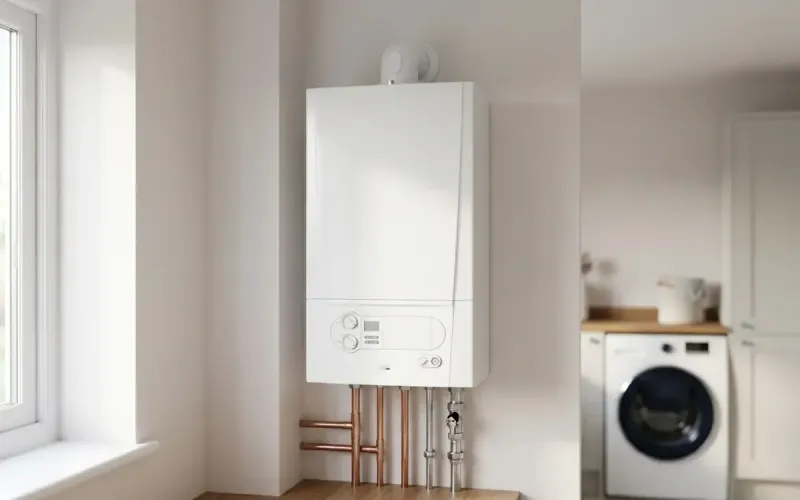
A combi boiler is an all-in-one unit. It heats water on demand directly from the mains and feeds your taps and radiators from the same box on the wall. Fewer components means a simpler, cheaper installation, which is why a like-for-like combi swap is usually the most affordable boiler replacement.

A system boiler is similar to a combi, but works with a separate hot water cylinder. The cylinder stores hot water ready for use, which is why system boilers can supply multiple taps at once. The added cost reflects the cylinder, the pipework that connects it, and the slightly larger boiler output required.

A conventional boiler uses both a hot water cylinder and a cold water tank, usually in the loft. It's the most complex setup, with the most pipework, and the most expensive to install or replace. Conventional systems also take longer to heat water (it has to be stored first), which is why most homeowners now switch to combi or system when replacing an old conventional setup.

Not sure what boiler is right for you? Contact us and our experts can advise.

Boiler Replacement Cost By Property Size

The size of your home directly affects the boiler size you need, which is measured in kilowatts (kW). A boiler that's too small won't heat your home properly; one that's too large wastes energy and money.

Here's how typical boiler sizes and new boiler costs scale with property size:

Property size

Typical boiler output

Typical boiler type

Typical installed cost

Flat / 1-bed

24–28 kW

Combi

£2,000–£2,800

2–3 bed, 1 bathroom

28–32 kW

Combi

£2,200–£3,200

3–4 bed, 1–2 bathrooms

30–35 kW

Combi or system

£2,500–£3,800

4–5+ bed, 2+ bathrooms

35–42 kW

System or conventional

£3,000–£4,500+

Boiler outputs and types are typical guides. Final sizing is based on a heat-loss calculation tailored to your property, not bedroom count alone.

A common mistake is to size a boiler purely on house size. What matters is your heat demand. This is driven by floor area, insulation level, window quality, how many people live in the home, and your hot water usage. Two homes with the same number of bedrooms can need very different boilers, and a 3-bed home with two bathrooms is often better suited to a system boiler than a combi, regardless of size.

What Affects the Cost of a New Boiler?

The final cost of your installation depends on a number of factors specific to your property. Here's what influences the new boiler cost and why.

  • Boiler type and output: The type of boiler (combi, system or conventional) and its kW output are the single biggest factors in the unit cost. A higher-output boiler costs more, but undersizing leads to weak heating and lukewarm hot water.

  • Like-for-like swap vs conversion: A like-for-like replacement in the same location is the simplest and cheapest job, usually completed in a day. Converting from one boiler type to another – system to combi, conventional to combi, removing a back boiler – adds labour, materials and time, often pushing the boiler replacement cost up by £1,000–£2,000.

  • Moving the boiler: If you want the new boiler in a different location – for example, moving from a kitchen wall into a utility room or garage – you'll need new flue routing, longer gas and water pipework, and additional electrical work. This typically adds £300–£800.

  • Pipework and gas supply: Older properties sometimes need pipework upgrades to handle a modern condensing boiler, and the gas supply pipe from the meter may need increasing in diameter. Most installations also include a system flush to clear sludge from your radiators and pipework, which protects the new boiler and is required to validate most manufacturer warranties.

  • Existing system condition: If you're replacing a back boiler (where the boiler sits behind a fireplace), removing the old unit adds significant work. Asbestos flues, older microbore pipework and aged hot water cylinders can all add cost.

  • Smart controls and thermostats: Modern smart heating controls – including Hive, Nest and Tado – typically add £150–£250 to the installation. Weather-compensation controls, which adjust the boiler output based on outside temperature, can improve efficiency and add a similar amount.

  • Scaffolding and access: Most boiler installations don't need scaffolding, but where flue routing requires roof access – flat roofs, awkward angles, or two-storey installations – scaffolding can add upwards of £500.

Do I Need a New Boiler or Should I Repair Mine?

Most boilers last 10–15 years before replacement becomes the better financial decision. Below that age, repairs are often worth doing. Above it, repair costs start stacking up against an ageing, less efficient unit.

For full diagnosis and minor fault repairs, our boiler servicing and repairs service can usually get an older unit running again. But where the numbers don't add up, our engineers will tell you straight rather than charge you for repeated call-outs.

Here's a simple framework for the decision:

Boiler Under 8 Years Old

Usually worth repairing. Modern parts are widely available and a one-off fault doesn't mean the boiler is failing.

Boiler 8–12 Years Old

Replacement starts to make sense. If you've had two or more significant repairs in 18 months, you're often spending more on patching it than a new boiler would cost over its lifespan.

Boiler Over 12 Years Old

Replacement is often the right call regardless of fault frequency. Parts become harder to source, efficiency has likely dropped, and the running cost difference alone can justify the upgrade.

Unreliable in Winter

Don't wait for it to fail completely. An emergency replacement in January costs the same as a planned one in October, but you've spent days without heating in the meantime.

Will a New Boiler Reduce My Energy Bills?

Yes, usually by around £100–£200 a year compared to an older, less efficient unit. The exact saving depends on how old your current boiler is, how efficient it was when installed, and how much heating and hot water your household uses.

A new A-rated condensing boiler converts around 90% of the gas it burns into usable heat. A boiler from 15–20 years ago typically operates at 70–80% – so for every £1 you spend on gas, 20–30p is wasted heat going up the flue. Replacing it captures more of what you're already paying for.

Here's how that looks for a typical 3-bed home using 11,500 kWh of gas per year, at the current Ofgem price cap rate of around 5.74p per kWh:

Boiler condition

Efficiency

Annual heating cost

New A-rated condensing

90%

£733

10-year-old boiler

85%

£777

15-year-old boiler

80%

£825

20-year-old boiler

75%

£880

25-year-old boiler

70%

£943

Based on annual gas use of 11,500 kWh and a unit rate of 5.74p/kWh. Actual savings depend on household usage and boiler condition.

Beyond the boiler itself, modern smart controls can add another 5–15% in efficiency by avoiding overheating empty rooms and adjusting output based on weather conditions.

If you want to reduce bills further, the bigger jump in running costs comes from switching to a low-carbon heating system. A new boiler reduces what you pay for gas; an air source heat pump on a time-of-use electricity tariff can deliver heat at less than half the per-kWh cost of gas – but it's a larger upfront investment.

New Boiler vs Air Source Heat Pump: Which Is Better?

For most homeowners with mains gas and a working boiler, a new gas boiler is the cheaper option upfront. For households replacing oil or LPG, off-grid properties, or anyone planning long-term against rising gas prices and tightening regulations, an air source heat pump wins on total cost of ownership.

Factor

New gas boiler

Air source heat pump

Upfront cost (after grants)

£2,000–£4,500

£3,000–£10,500 (after BUS)

Government grant

None for standard replacement

Up to £7,500 (gas/electric) or £9,000 (oil/LPG) via BUS

Annual running cost (3-bed home)

~£733–£943

~£567–£709 (standard tariff) or ~£340 (time-of-use tariff)

Typical lifespan

10–15 years

15–25 years

Servicing

Annual gas safety + service

Annual service (no gas safety needed)

Suitable for

Most UK homes with mains gas

Most properties with outdoor space

A new boiler usually makes more sense if:

  • Your existing boiler has failed and you need heating fast

  • You have mains gas and a recent, well-insulated home setup

  • You don't have outdoor space for a heat pump unit

  • You're in a listed building or conservation area with planning restrictions

  • Upfront budget is the priority

An air source heat pump usually makes more sense if:

  • You're currently on oil or LPG (BUS grant rises to £9,000)

  • You qualify for ECO4 and your existing boiler is already condensing (see the next section)

  • You're planning 10–15+ years in the property and want to lower long-term running costs

  • You want to move away from fossil fuel heating ahead of expected regulation

  • You're combining the upgrade with solar panels for further savings

If you'd like to understand how a heat pump would work in your property before deciding, our guide on how air source heat pumps work explains the technology, and our ASHP cost guide covers pricing and running costs in detail.

Can I Get a Free or Funded Boiler?

Yes, in specific cases. There are two main routes for funded heating support in the UK, and which one applies depends on your existing system and your household circumstances.

ECO4

The ECO4 scheme is the main government programme funding heating and insulation upgrades for low-income and vulnerable households.

Eligible homes can receive a fully funded boiler replacement, but only where a non-condensing boiler is being replaced with a new condensing one. If your current boiler is already condensing (which it likely is if it was installed after 2005), ECO4 won't fund a like-for-like replacement.

You may qualify for ECO4 if:

  • You receive qualifying benefits such as Universal Credit, Pension Credit, Income Support, or Housing Benefit

  • You're on a low household income

  • Your home has an EPC rating of D, E, F or G

  • You own your home or rent privately with landlord consent

Elite Energy is an approved ECO4 installer. We check your eligibility as part of your consultation and manage the full application on your behalf. You can check your eligibility here.

Boiler Upgrade Scheme (BUS)

The Boiler Upgrade Scheme doesn't fund new gas boilers. It supports the move to low-carbon heating only, currently offering:

  • Up to £7,500 towards an air source heat pump replacing a gas or electric system

  • Up to £9,000 towards an air source heat pump replacing an oil or LPG system

BUS is not means-tested, so any homeowner whose property meets the criteria can apply. We manage the BUS application on your behalf as part of any ASHP installation.
How Long Does a New Boiler Last?

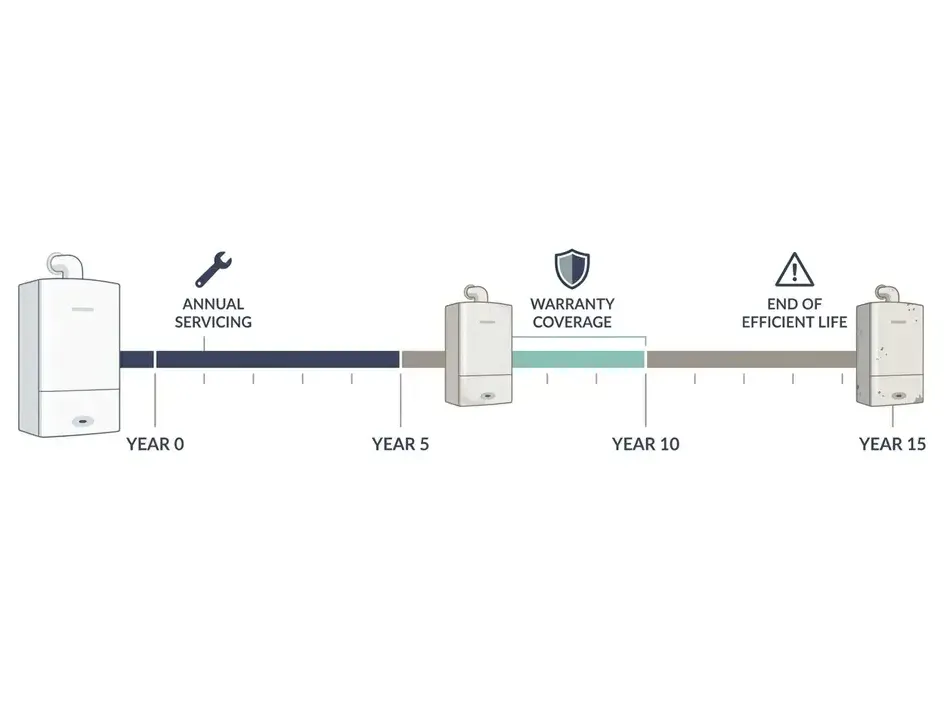
A modern boiler typically lasts 10–15 years with annual servicing. Beyond that, efficiency drops, parts become harder to source, and the risk of breakdown rises. Most manufacturer warranties cover 7–10 years on parts and labour, with some premium ranges offering up to 12 years on registration.

The biggest factor in lifespan is annual servicing. A well-maintained boiler will reach the upper end of its expected life and hold its efficiency for longer. A neglected one often fails before year 10. Annual boiler servicing is also a requirement of most manufacturer warranties, miss a service and you can void the cover.

By comparison, an air source heat pump typically lasts 15–25 years. If you're weighing up a boiler replacement against a heat pump and planning to stay in your home for 15+ years, the longer lifespan can shift the total cost-of-ownership case significantly.

How Long Does Boiler Installation Take?

A like-for-like combi boiler replacement is usually completed in a single day. More involved jobs take longer.

Typical installation timelines:

  • Combi boiler like-for-like swap: 1 day

  • System or conventional like-for-like swap: 1–2 days

  • Conversion (e.g. system to combi): 2–3 days

  • Back boiler removal and conversion: 2–3 days

  • Boiler relocation with new flue routing: 2–3 days

Once your new boiler is fitted, it's commissioned, tested, and the controls and warranty paperwork are handed over before the job is signed off.

Get a New Boiler Quote from Elite Energy

A new boiler is a significant investment, and the cost varies house by house. Our engineers will assess your home, current system, hot water and heating demand, and any work needed beyond a like-for-like swap – and give you a fixed price you can rely on.

With over 5,000 completed installations, more than 15 years in the energy industry, and a fully in-house team of Gas Safe registered engineers, we deliver every boiler installation end-to-end without subcontractors. We're MCS-certified, TrustMark registered, and RECC approved.

What you get with an Elite Energy boiler installation:

  • A free no-obligation home survey from a Gas Safe registered engineer

  • A fixed-price quote with no hidden extras

  • Installation by our in-house team, with no subcontractors

  • Full management of any ECO4 application on your behalf

  • A clear walkthrough of finance options if you want to spread the cost

  • Honest advice on whether a heat pump might be a better long-term fit

Call us on 0800 246 1676 or request a quote below.

FAQs About Boiler Replacement Costs

Do I need a Gas Safe engineer to install a boiler?

Yes. UK law requires all gas boiler installations to be carried out by a Gas Safe registered engineer. Oil boilers require an OFTEC registered engineer. Every Elite Energy installation is carried out in-house by our certified engineers.

Can I install a new boiler myself?

No. It's illegal to install a gas boiler without Gas Safe registration, and DIY installation invalidates manufacturer warranties, voids your home insurance, and is a serious safety risk. Electric boilers also require qualified electrical installation under Part P Building Regulations.

Does a new boiler come with a warranty?

Yes. Most modern boilers come with 7–10 year manufacturer warranties on parts and labour. Some premium ranges extend to 12 years on registration. To keep the warranty valid, the boiler must be serviced annually by a qualified engineer.

Do I need a power flush with my new boiler?

Not always, but a system flush of some form is required by most manufacturers to validate the warranty. A standard chemical clean and the addition of a magnetic filter is usually enough. A full power flush (typically £350–£600) is only needed if your existing system shows signs of sludge build-up, cold spots on radiators, or noisy circulation.

What size boiler do I need for my home?

Boiler size depends on your home's heat demand, hot water requirements, number of radiators, and household usage. As a rough guide, a flat or small terrace usually suits a 24–28 kW combi, a 3-bed home a 28–32 kW combi, and a larger property a 30–42 kW system or conventional boiler.

Are gas boilers being banned?

Not for existing homes. From 2026, the Future Homes Standard prohibits new gas connections on new-build properties, but replacements in existing homes continue.

Can I get a boiler on finance?

Yes. We offer finance through Klarna at 21.9% APR, allowing you to spread the cost over monthly payments. Finance is subject to status, and we'll confirm the exact monthly figure as part of your fixed-price quote.

How quickly can a new boiler be installed?

For straightforward like-for-like replacements, we can usually fit a new boiler within 1–2 weeks of survey, sometimes faster in emergency breakdown cases. Conversions or more complex installations may need slightly longer scheduling depending on parts availability and your preferred date.

Get A Quote